By the time mold becomes visible — on a ceiling corner, along a baseboard, around a vent register — it has almost always been growing in places you can't see for months. And in the majority of cases we investigate, the common thread isn't a roof leak or a plumbing failure. It's an HVAC system that quietly lost its ability to manage indoor humidity long before anyone connected it to the musty smell in the back bedroom.
In Altamonte Springs' climate, where homes run their AC for ten to eleven months of the year, your HVAC system is your primary defense against the indoor moisture conditions that mold requires to grow. When that system starts short-cycling, losing dehumidification efficiency, or distributing air through degraded ductwork, it stops being a barrier to mold and starts being a contributor to it.
A correctly sized replacement system — paired with a duct inspection and, where needed, targeted air quality upgrades — addresses the moisture problem at its source rather than treating the symptoms. This page explains exactly how top HVAC system replacement near Altamonte Springs FL can help address the HVAC–mold connection, what a new system realistically resolves, and what Altamonte Springs homeowners need to know to make a fully informed, confident decision about the mold situation in their home.
TL;DR Quick Answers
Top HVAC System Replacement Near Altamonte Springs FL
Best local option: Filterbuy HVAC Solutions — 4.8 stars, 741 Google reviews, serving ZIP codes 32701, 32714, 32716, and 32751.
What sets us apart from other HVAC replacement companies in Altamonte Springs:
Manual J load calculations on every job — not tonnage matching
Same-day installs available
Every installation permitted and inspected — no exceptions
State-licensed technicians
Two-year post-installation maintenance included standard
Interest-free financing available
What a replacement costs in Altamonte Springs:
Typical range: $6,000 to $13,200
Duke Energy rebates up to $1,000 available for qualifying systems
Federal tax credit up to $2,000 for qualifying heat pumps
When replacement makes more sense than repair:
System is 10 to 12 years or older
Repair cost exceeds 50% of replacement cost
Indoor humidity consistently above 55% despite AC running
Two or more significant repairs in the past two years
What a properly sized replacement delivers in Central Florida:
Indoor humidity held below the CDC-recommended 50% threshold
Elimination of the short-cycling that drives mold conditions
Cleaner, drier air from day one — not just lower temperatures
Top Takeaways
1. A mold problem is a moisture problem. A moisture problem is an HVAC problem.
Indoor mold requires sustained humidity above 50 percent to establish itself
Short-cycling systems routinely leave Altamonte Springs homes in the low-to-mid 60s
Remediation without fixing the system is temporary by design
Correct sequence: replace the system, then remediate — not the other way around
2. Your HVAC system is the air your family breathes — not just the temperature they feel.
EPA confirms indoor air can be 2 to 5 times more polluted than outdoor air
In Central Florida, windows stay closed year-round — there is no natural dilution
Aging systems recirculate mold spores, dust, and VOCs through a sealed home daily
Replacement improves the indoor environment from day one — not just comfort
3. A system still running is not the same as a system still doing its job.
70 to 90 percent of residential systems have at least one energy-wasting fault, per the DOE
Common faults — bad refrigerant charge, airflow imbalances, duct leakage — kill dehumidification
The gap between functional and protective widens every year past a system's service life
Waiting for a breakdown is the most expensive version of this decision
4. Proper sizing matters as much as the equipment itself.
Oversized systems short-cycle — they cool briefly, shut off, and never finish dehumidifying
Matching the previous tonnage without a Manual J calculation recreates the same problems
A correctly sized system holds humidity below the CDC's recommended 50 percent threshold
That threshold is the line between a home that protects your family and one working against them
5. The best replacement decisions happen before a breakdown forces the issue.
Proactive replacements allow time to evaluate equipment, stack rebates, and secure tax credits
Duke Energy offers rebates up to $1,000 — but the Home Energy Check must happen before installation
Federal tax credits up to $2,000 for qualifying heat pumps require advance planning
The homeowners who feel best about this decision years later are the ones who didn't wait
Mold needs three things to grow: a food source, the right temperature, and moisture. In a Central Florida home, the first two are always present. Building materials, dust, and organic matter provide the food source. Florida's climate provides the temperature. The only variable your home can actually control is moisture — and that control lives almost entirely with your HVAC system.
When we investigate persistent mold problems in Altamonte Springs homes, we rarely find a single dramatic cause. What we find instead is a pattern: an aging system that runs in short bursts, cooling the air temperature just enough to satisfy the thermostat without ever completing a full dehumidification cycle. Indoor humidity creeps into the 60s and stays there. Surfaces that should be dry stay slightly damp. Mold finds its footing in wall cavities, duct insulation, and ceiling spaces that nobody checks until the smell becomes impossible to ignore.
The HVAC system didn't cause the mold directly. But it created the conditions that made mold inevitable.
What a New HVAC System Actually Does to Address Mold Conditions
A properly sized, correctly installed replacement system attacks the moisture problem that underlies most mold growth in Central Florida homes in several specific ways.
It maintains consistent dehumidification. A new system sized correctly for your home's actual load — not just matched to your existing unit's tonnage — runs longer, steadier cycles that pull meaningful moisture out of the air on every run. Homes that have been sitting at 62 to 65% indoor humidity routinely drop into the 45 to 50% range after a proper replacement. Below 50%, mold growth slows dramatically. Below 45%, the conditions that support active mold colonization largely disappear.
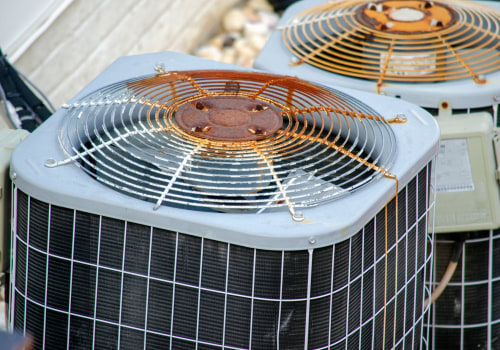
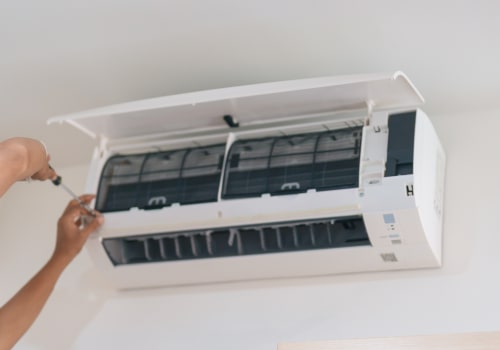
It eliminates the system itself as a contamination source. When we remove aging HVAC systems from Altamonte Springs homes, we frequently find mold growth on evaporator coils, in drain pans that have been holding standing water, and on duct insulation that has been wet for years. A replacement — paired with professional duct cleaning and inspection — removes those active mold sources from your home's air circulation entirely. You cannot clean your way to healthy air when the distribution system itself is the problem.
It restores proper airflow throughout the home. Pressure imbalances caused by undersized or degraded ductwork create low-airflow zones where moisture accumulates and mold establishes. A replacement that includes duct evaluation and correction restores balanced airflow to every room — eliminating the dead zones where conditions for mold are most favorable.
What a New HVAC System Cannot Do on Its Own
This is the part of the conversation most contractors skip, and we think that's a disservice to homeowners who deserve a complete picture.
A new HVAC system addresses the ongoing moisture conditions that allow mold to grow and spread. It does not remediate mold that has already colonized building materials. If your home has active mold growth in walls, under flooring, or in ductwork, that growth needs to be professionally addressed before or alongside a system replacement — not instead of it.
The sequence that produces the best outcomes for Altamonte Springs homeowners dealing with both an aging system and an active mold concern is straightforward:
Professional mold assessment to identify the extent and location of existing growth
HVAC evaluation to determine whether the system is contributing to moisture conditions
Mold remediation of affected materials where required
System replacement with correct sizing and duct evaluation
Post-installation air quality verification to confirm indoor humidity is consistently reaching the target range
Skipping step one and moving directly to replacement is a mistake we occasionally see — and it leaves homeowners with a new system and an unresolved mold problem because the existing growth was never properly addressed.
The Ductwork Factor: Why It's Inseparable From the Mold Conversation
In Altamonte Springs homes — particularly those built in the 1990s and early 2000s — the ductwork is often as much a part of the mold problem as the equipment itself. Flex duct that has been compressed, disconnected at joints, or running through unconditioned attic space absorbs humidity and provides ideal conditions for mold growth inside the distribution system.
When mold establishes inside ductwork, every time the system runs it distributes mold spores throughout every room in the home. Occupants experience respiratory symptoms, allergy flare-ups, and that distinctive musty odor that surfaces when the AC kicks on — often without ever identifying the ductwork as the source.
A system replacement that doesn't include a thorough duct inspection is an incomplete solution for any Altamonte Springs home with a mold concern. In cases where ductwork has sustained moisture damage or visible mold growth, duct replacement or encapsulation is the right answer — not cleaning alone.
Additional Air Quality Upgrades That Strengthen a New System's Mold Defense
For Altamonte Springs homeowners who want to go beyond baseline protection, two upgrades work particularly well alongside a system replacement in Central Florida's climate.
UV Light Installation. Germicidal UV lights installed in the air handler target mold spores, bacteria, and other biological contaminants at the point where air enters the distribution system. They operate continuously, neutralizing biological growth on evaporator coils — the component most vulnerable to mold colonization in Florida's humidity — and preventing recontamination of a freshly cleaned system.
Duct Encapsulation. For homes with older flex ductwork running through unconditioned attic space, encapsulation seals the exterior of the duct system against moisture infiltration. In Central Florida's climate, where attic temperatures regularly exceed 130 degrees and humidity in unconditioned spaces can reach extreme levels, encapsulation is one of the most effective long-term defenses against duct-based moisture and mold problems.
How to Know if Your HVAC System Is Contributing to Your Mold Problem
Not every mold problem in an Altamonte Springs home is HVAC-related. But after years of evaluating these situations, here are the specific indicators that point toward the system as a primary contributing factor:
Indoor humidity consistently above 55% despite the system running regularly
Musty odor that intensifies when the AC turns on — a reliable indicator of mold in the air handler or ductwork
Visible mold growth concentrated near supply or return vents
Mold recurring in the same locations after repeated cleaning
Family members experiencing respiratory symptoms that improve noticeably when away from home for extended periods
A system more than 10 to 12 years old that has never had a professional duct inspection
Any combination of these indicators warrants a professional HVAC evaluation before investing further in surface mold remediation. Treating the symptom without addressing the source is a cycle that Altamonte Springs homeowners dealing with persistent mold know all too well — and one that a properly evaluated, correctly replaced system can finally break.
Take the Next Step Toward a Mold-Resistant Home
If your Altamonte Springs home has a mold concern and an aging HVAC system, the two issues are almost certainly connected — and addressing them together is both more effective and more economical than treating them separately. Schedule a no-obligation consultation with our team. We'll evaluate your system, assess your ductwork, and give you an honest picture of what's driving the moisture conditions in your home and what a complete solution looks like. That's the conversation we'd want to have if this were our own family's home.
"In almost every persistent mold case we investigate in Altamonte Springs, the homeowner has already spent money on surface remediation — sometimes more than once. What they haven't done is address the moisture conditions that made the mold possible in the first place. A new system doesn't just replace old equipment. When it's properly sized and correctly installed, it changes the indoor environment itself — and that's the difference between treating mold and actually preventing it."
Essential Resources
Replacing your HVAC system is one of the biggest investments you'll make in your home. We've served enough Altamonte Springs families to know which resources actually matter — and which ones people wish they'd found before signing a contract. Here they are.
1. Verify Your Contractor's State License Before Anyone Starts Work
Florida DBPR — License Search Portal https://www.myfloridalicense.com/wl11.asp
Florida requires every HVAC contractor to hold an active state license
Takes less than two minutes to confirm — search by name or license number
Unlicensed work voids warranties, fails inspections, and puts liability on you
We verify ours before every job. You should verify anyone you invite into your home.
2. Get Up to $1,000 Back on a Qualifying HVAC Replacement
Duke Energy Florida — HVAC Replacement Rebate Program https://www.duke-energy.com/Home/Products/Home-Energy-Improvement/HVAC-Replacement
Duke Energy customers in Altamonte Springs may qualify for rebates up to $1,000
The free Home Energy Check must be completed before installation begins — not after
Duct repairs and insulation may qualify at the same time, stacking your total savings
We walk homeowners through this process regularly because most don't realize the check-first requirement until it's too late
3. See Every Incentive Available at Your ZIP Code Before You Choose Equipment
ENERGY STAR — Product Rebate Finder https://www.energystar.gov/rebate-finder
Enter your ZIP code to see utility rebates, manufacturer offers, and local programs in one place
Run this before selecting equipment — qualifying models vary by program
Knowing what qualifies upfront shapes which system delivers the best long-term value
Duke Energy is one source. This tool surfaces all of them.
4. Stack a Federal Tax Credit on Top of Your Utility Rebates
IRS — Energy Efficient Home Improvement Credit (Section 25C) https://www.irs.gov/credits-deductions/energy-efficient-home-improvement-credit
Qualifying heat pumps may receive a federal tax credit of 30% of project costs, up to $2,000
High-efficiency central AC units may qualify for up to $600
Federal credits stack on top of utility rebates — this changes which system makes the most financial sense
Talk to your tax advisor; we can tell you which equipment tiers qualify
5. Know What Florida Law Requires Before Your Installation Date
Florida DBPR — Construction Industry Licensing Board https://www2.myfloridalicense.com/construction-industry/
Every HVAC replacement in Florida requires a permit — no exceptions
Permits protect you: they guarantee code compliance, protect your insurance, and support your home's resale value
We've seen the downstream consequences of unpermitted installs enough times to make this non-negotiable
Any contractor who discourages pulling a permit is a contractor worth walking away from
6. Ask the Right Questions Before You Choose a Contractor
Today's Homeowner — Best HVAC Companies in Altamonte Springs FL https://todayshomeowner.com/near-me/florida/altamonte-springs/hvac/
Independent, data-driven rankings that go beyond star ratings
Covers the questions every homeowner should ask: sizing methodology, written estimates, warranty terms, equipment transparency
A contractor who can't answer these questions clearly isn't ready to work on your home
We welcome every one of them
7. Understand Why This Is a Health Decision, Not Just a Comfort Decision
U.S. EPA — Indoor Air Quality https://www.epa.gov/report-environment/indoor-air-quality
EPA data shows indoor air is 2 to 5 times more polluted than outdoor air on average
In Altamonte Springs, windows stay closed and the AC runs most of the year — your system is your air quality
An aging, underperforming system isn't just uncomfortable; it's actively affecting the air your family breathes every day
This is why we treat every replacement conversation as a health conversation first
Supporting Statistics
Most homeowners come to us focused on comfort. What they don't expect is to leave the conversation thinking about health. But that's where the research leads — and it matches exactly what we see in homes across Altamonte Springs every week.
Stat 1: Indoor air is 2 to 5 times more polluted than outdoor air — and sometimes over 100 times more.
The EPA has documented that indoor pollutant levels can run 2 to 5 times higher than outdoor levels — and in some cases, more than 100 times higher.
When we share this with homeowners, the reaction is almost always disbelief. Most people picture poor air quality as something that happens outside. The idea that the air inside their own home could be significantly worse is genuinely surprising.
Here's why it happens in Central Florida:
Windows stay closed most of the year
The AC runs nearly year-round
Dust, mold spores, VOCs, and particulate matter recirculate through the same sealed space daily
Aging or underperforming systems offer no meaningful dilution or filtration
There's no natural cross-ventilation here. The HVAC system is the only mechanism managing indoor air. When it's aging or underperforming, it's managing it poorly. This is why we treat every replacement conversation as an air quality conversation first — not a comfort conversation.
Source: U.S. EPA — Why Indoor Air Quality Is Important https://www.epa.gov/iaq-schools/why-indoor-air-quality-important-schools
Stat 2: One in three U.S. structures has damp conditions that encourage mold and bacteria growth.
EPA guidance on biological pollutants confirms that one-third of all U.S. structures have damp conditions encouraging mold and bacteria — contaminants linked to allergic reactions, asthma, and infectious disease.
We think about this every time we pull an evaporator coil from an aging system in Altamonte Springs. What we find isn't subtle:
Coils caked with biological growth
Drain pans that have been wet for years
Duct insulation saturated with attic humidity
Systems still running — but no longer protecting the home's air quality
The reason this happens more here comes down to physics. When an aging unit short-cycles — shutting off before completing a full dehumidification cycle — indoor humidity climbs into the low 60s and stays there. At that level, mold doesn't just survive. It thrives. And it uses the HVAC system itself as a primary surface.
Surface remediation alone never solves this. Clean the visible mold, but leave the moisture conditions unchanged, and the problem comes back. The system driving those conditions has to be part of the solution.
Source: U.S. EPA — Biological Pollutants' Impact on Indoor Air Quality https://www.epa.gov/indoor-air-quality-iaq/biological-pollutants-impact-indoor-air-quality
Stat 3: 70 to 90 percent of home HVAC systems have at least one energy-wasting fault.
The DOE's Office of Energy Efficiency and Renewable Energy found that 70 to 90 percent of residential systems operate with at least one energy-wasting fault.
This is the statistic that surprises technicians least and homeowners most. Having serviced thousands of systems across the greater Orlando area, it doesn't feel like an overstatement. The most common faults we diagnose:
Improper refrigerant charge — compromises dehumidification directly
Airflow imbalances — common in 1990s–2000s homes with undersized return ducts
Duct leakage — bleeds conditioned air into unconditioned attic space for years before anyone notices
Oversized equipment — short-cycles before it dehumidifies, recreating the exact problem homeowners are trying to solve
The faults don't just waste energy. They produce real outcomes: humidity that won't drop, rooms that won't balance, systems that run constantly without delivering a healthy indoor environment.
A properly installed replacement — sized by Manual J load calculation, not by matching the previous tonnage — eliminates those accumulated faults from day one.
Source: U.S. DOE — About the Smart Tools for Efficient HVAC Performance Campaign https://www.energy.gov/eere/buildings/about-smart-tools-efficient-hvac-performance-campaign
Stat 4: The CDC recommends keeping indoor humidity no higher than 50 percent — all day, every day.
The CDC recommends maintaining indoor relative humidity at no higher than 50 percent throughout the day to prevent mold growth — and identifies the air conditioner as the primary tool for achieving it.
We put that 50 percent threshold on the table at every replacement consultation. Not as a footnote. As the central question. Here's what our field measurements consistently show in Altamonte Springs homes with aging or improperly sized systems:
Typical indoor humidity readings: low to mid 60s
What homeowners feel: sticky air, bedding that never feels dry, heaviness in closed rooms
What's actually happening: the indoor environment is sitting well above the biological threshold where mold conditions stabilize
The numbers matter:
Below 50%: mold growth slows significantly
Below 45%: conditions become genuinely unfavorable for mold
Above 55%: the home is working against itself — no amount of cleaning sustainably fixes this
A replacement system changes that math. But only when it's properly sized to the home's actual load — accounting for square footage, insulation, window exposure, and duct condition — not matched to the previous unit's tonnage. That's the difference between a system that runs and a system that actually protects the indoor environment your family lives in every day.
Source: U.S. CDC — Mold: What You Can Do https://www.cdc.gov/mold-health/about/index.html
These findings reinforce why HVAC sуstеm maintenance is critical in Altamonte Springs: indoor air can be far more polluted than outdoors, damp conditions and common system faults drive mold-friendly humidity above 50%, and proactive upkeep helps control moisture, airflow, and air quality before problems escalate.
Final Thought & Opinion
We've had this conversation more times than we can count.
A homeowner calls about a mold problem. They've already paid for remediation — sometimes twice. The visible mold is gone. The musty smell came back within a season. And somewhere in the conversation, it comes out that their HVAC system is twelve years old, runs constantly, and indoor humidity sits in the mid-60s year-round.
The mold was never the problem. The moisture conditions were. And the system driving those conditions was never part of the solution.
What most homeowners get wrong about mold isn't the remediation. It's the sequence.
The typical approach:
Spot the mold
Call a remediation company
Pay to have it cleaned
Watch it come back
Repeat
What the research supports — and what years of field experience confirms — is a different sequence entirely:
Identify and correct the moisture source first
Evaluate the HVAC system's role in creating or sustaining those conditions
Replace the system if it can no longer hold humidity below 50 percent consistently
Remediate with the moisture problem actually resolved
Verify indoor air quality after installation
The order isn't incidental. That's the entire point.
A new system installed after remediation isn't a luxury add-on. In a Central Florida home with year-round AC dependence, it's the mechanism that determines whether the remediation holds.
Here's our honest opinion — and we'll be direct.
The HVAC industry undersells its role in indoor air quality.
Not because the information isn't available — the EPA, CDC, and DOE data is there for anyone who looks. But because comfort is a more immediate conversation than biological conditions inside your home.
Comfort you feel on the day of installation
Air quality improvements are quieter
They show up as symptoms that don't return, sleep that feels different, a home that stops feeling heavy in the summer
The homeowners who feel best about their replacement decision — three and five years out — aren't the ones who waited for a breakdown. They're the ones who recognized that a system technically still running is not the same as a system still doing its job.
That gap — between functional and protective — is where the real cost of waiting lives. It doesn't show on the energy bill. It shows in the air your family breathes every day while you wait.
Central Florida doesn't give an aging system a recovery period. The demands are year-round. The consequences of a system that can't keep up accumulate the same way.
What we'd tell a neighbor.
If all three of these are true, don't start with another remediation estimate:
Your system is more than ten years old
Your home consistently feels humid despite the AC running
You've dealt with recurring mold in the same locations
Start with an honest HVAC assessment. Not a sales call. An actual evaluation of whether your system can reach and hold the humidity levels your home needs to stop creating the conditions you keep paying to clean up.
That's the conversation we'd want someone to have with us if it were our own home. It's the one we try to have with every Altamonte Springs homeowner who calls.
FAQ on Top HVAC System Replacement Near Altamonte Springs FL
Q: How much does HVAC system replacement cost in Altamonte Springs FL?
A: Most Altamonte Springs homeowners pay between $6,000 and $13,200.
Price variation comes down to scope — not equipment brand.
What drives the range:
System size — requires Manual J load calculation, not tonnage matching
Equipment efficiency tier — higher SEER2 costs more upfront, saves more long-term
Duct condition — repairs or encapsulation add cost but determine whether the new system performs
Add-ons — UV light, smart thermostat, attic insulation
The one question that reveals the most about a contractor: are you calculating load or matching tonnage?
Contractors who match tonnage without calculating are skipping the step that determines whether the new system actually solves the problem. We've assessed enough homes where this shortcut was taken to know it's never minor.
Ways to reduce out-of-pocket cost:
Duke Energy rebates up to $1,000 — complete the free Home Energy Check before installation
Federal tax credit — 30% of project cost, up to $2,000 for qualifying heat pumps
Interest-free financing available through Filterbuy HVAC Solutions
Q: How do I know if I need to repair or replace my HVAC system in Altamonte Springs FL?
A: Four factors reliably answer this. Work through them in order:
Age — past 10 to 12 years in Florida means the system has run the equivalent of 15 to 20 years anywhere else. Year-round operation accelerates wear the calendar alone doesn't capture.
Repair cost — exceeds 50% of replacement cost? You're investing in borrowed time.
Humidity performance — cools to temperature but can't hold humidity below 55%? That's a fundamental performance problem repair won't fix.
Repair frequency — two or more significant repairs in two years is a pattern, not bad luck.
The question we ask on every assessment: will fixing this restore the home's air quality — or just delay this same conversation by six months?
A system still running isn't necessarily a system still protecting your home. In Central Florida's climate, that gap matters more than most homeowners realize until mold or respiratory symptoms have already appeared.
Q: How long does HVAC system replacement take in Altamonte Springs FL?
A: Most replacements complete in one to two days.
Straightforward equipment swap: one day
Replacement with duct repairs or encapsulation: two days
Same-day installs: available — a non-functional system in Altamonte Springs summer heat is never a minor inconvenience
What happens on installation day:
Technician reviews all scheduled work on arrival
Old system removed and properly disposed of
New system installed to current Florida code
Full diagnostic testing completed before technician leaves
Two-year post-installation maintenance included standard
Every installation we complete is permitted. Florida law requires it. Any contractor who discourages a permit — or goes quiet when you ask — is telling you something important about how they work.
Q: What size HVAC system does my Altamonte Springs home need?
A: Most Altamonte Springs homes need between 2.5 and 5 tons — with most falling toward the higher end.
Central Florida's heat load, humidity, and 1990s–2000s home construction push capacity requirements up in ways that surprise homeowners used to national averages.
The only reliable answer comes from a Manual J load calculation. It accounts for:
Square footage and ceiling height
Insulation levels in walls, attic, and floors
Window size, orientation, and glazing
Duct condition and layout
Local climate data specific to Altamonte Springs
What we see when sizing gets skipped:
Oversized system — short-cycles before completing dehumidification. The house feels cool but never dry. Most common source of recurring mold in homes we assess.
Undersized system — runs continuously, can't hit target temperature on peak days, wears out faster.
The previous system's tonnage is not a reliable starting point. A meaningful percentage of systems we replace were incorrectly sized at original installation. A load calculation protects the new system — and the family living under it.
Q: Is a permit required for HVAC replacement in Altamonte Springs FL?
A: Yes. Florida law requires a permit for every HVAC replacement — no exceptions.
This isn't bureaucratic formality. The consequences of unpermitted work land directly on the homeowner.
What we've seen happen when permits get skipped:
Insurance claims denied after system-related damage
Home sales delayed or collapsed at inspection
Manufacturer warranties voided — most require permitted installation
Code violations that become the next owner's legal problem
Liability for resulting damage shifts entirely to the homeowner
Every Filterbuy HVAC Solutions installation in Altamonte Springs is permitted, inspected, and completed by state-licensed technicians.
If a contractor offers a lower price and the permit conversation never comes up — ask directly. The price gap is never worth the exposure.
Verify any contractor's active Florida license before signing anything: Florida DBPR License Verification: https://www.myfloridalicense.com/wl11.asp
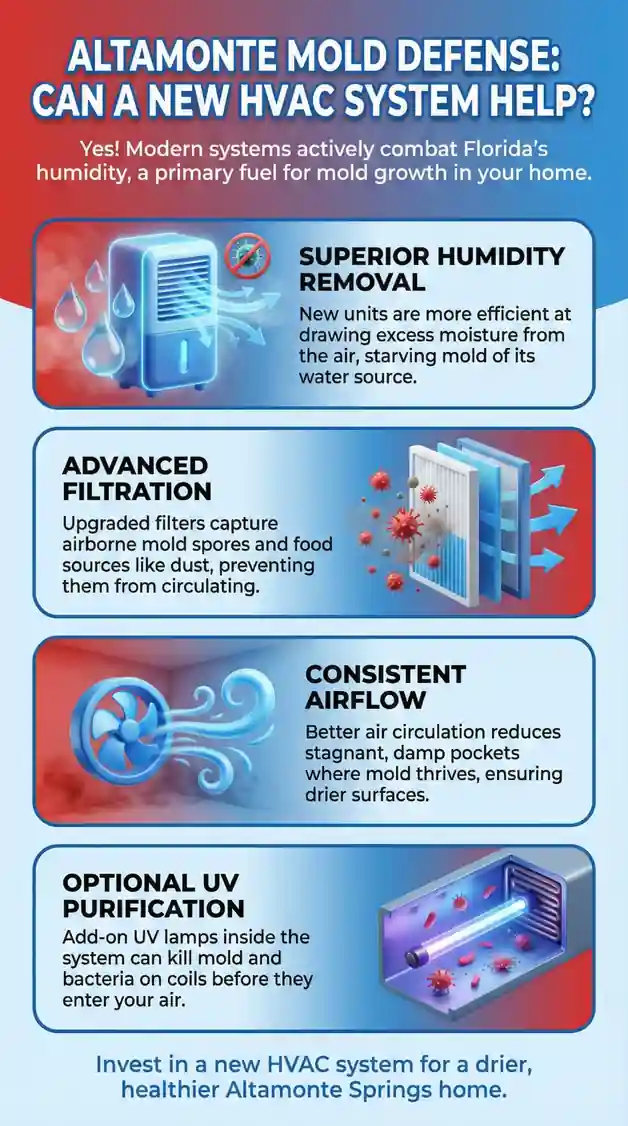
In Can a New HVAC System Help With Mold Problems in My Altamonte Springs Home?, we explain that a replacement can absolutely help—but only when it’s properly sized and installed to run long enough cycles to remove humidity, since mold risk in Central Florida is driven by moisture more than temperature. Once the system is in, filtration supports the long-term outcome by keeping airflow clean and consistent, whether you’re using a correctly fitted HVAC air filter replacement, a dependable MERV 8 HVAC air filter that helps maintain stable airflow, or stepping up to a MERV 13 HVAC air filter to better capture finer particles that often circulate alongside damp, musty conditions. The key point is that mold improvement comes from the system doing what it’s designed to do—control humidity through correct sizing and airflow—while the right filter choice helps the system keep performing that way month after month in an Altamonte Springs climate.