A brown ring on the ceiling the morning after the first big storm is the call we get most in Santa Barbara, and the homeowner nearly always asks how long it can wait. Two days at most. That's roughly how long wet drywall and insulation under a leaking roof have before mold can get started, based on the EPA guidance linked below.
Most of those rings didn't start that morning. Someone spotted a faint stain back in spring, the rain stopped, the stain stopped growing, and the problem slipped off the list until a storm rolled in off the Channel.
A bucket or a tarp buys you a few days, but the opening that lets the water in stays open until someone repairs it. After 30 years of roof repair in Santa Barbara , we've found that homeowners who act in the dry months almost always spend less than the ones who let the next storm decide for them.
TL;DR Quick Answers
Roof Repair Santa Barbara
Get a roof leak inspected within 24 to 48 hours, and have it repaired before the next storm.
Find the source first. Water runs along rafters and the roof deck, so the stain on your ceiling often sits several feet from where the water got in.
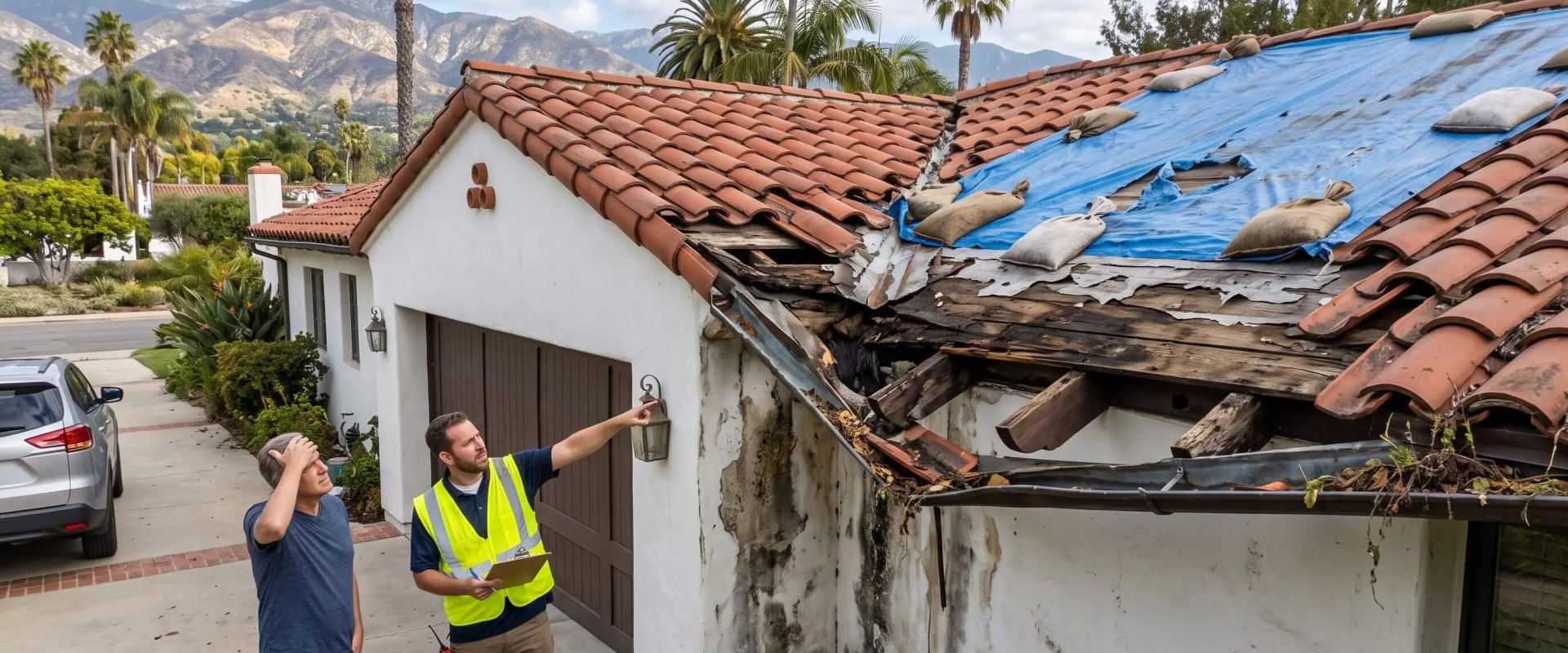
Look under the tiles. On Santa Barbara's clay and concrete tile roofs, many leaks come from worn underlayment beneath tiles that still look fine from the street.
Stabilize, then repair. A tarp or temporary patch protects the home during rain, and the permanent repair follows once the roof is dry and safe to work on.
Repair before you replace. An isolated leak on a solid roof deck usually needs a targeted repair, so ask for an honest assessment before anyone quotes a new roof.
Use the dry months. A leak fixed in early fall costs less than the same leak after a winter storm has soaked the insulation and decking.
Top Takeaways
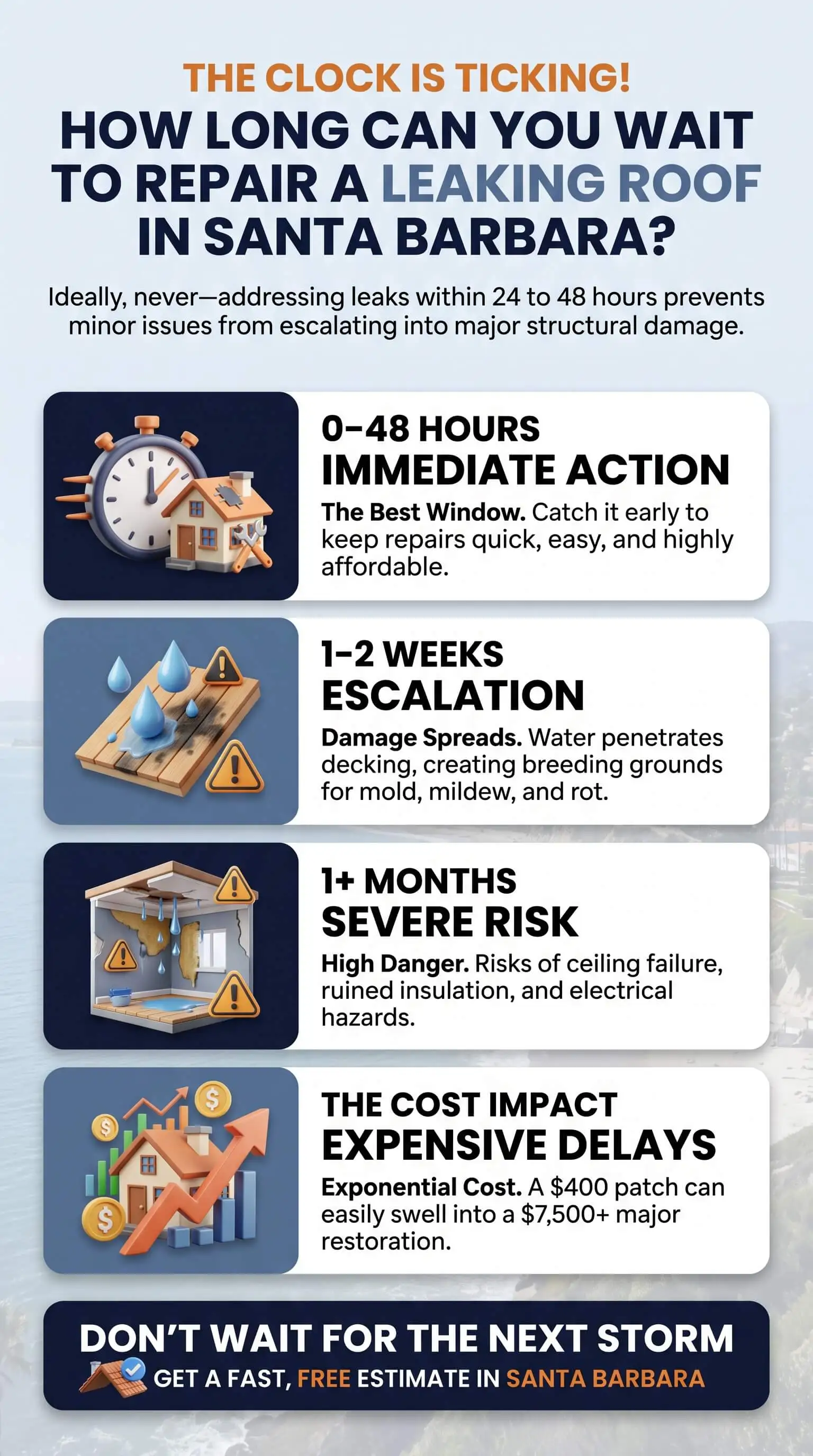
Have a leaking roof looked at within 24 to 48 hours, the window the EPA gives for drying wet materials before mold can grow.
Water coming in during rain or a sagging ceiling calls for a same-day call. A stain or damp insulation gives you about two days to schedule.
Santa Barbara's rain tends to arrive in heavy bursts between mid-October and April, so a leak that behaved all summer can fail in a single storm .
Water damage claims averaged $15,400 from 2019 to 2023, and insurers may push back on damage you didn't take reasonable steps to stop.
Most leaks are isolated and repairable, and an early inspection is what keeps a repair from growing into a replacement.
How Long Can You Wait to Fix a Roof Leak? A Severity Timeline
What you can see from inside the house tells us a lot about how much time you have. Here's how we'd rank the signs, from call-us-now to schedule-it-this-month.
Water dripping while it rains: Hours. Put a bucket under it, move anything you care about and call a roofer the same day.
A ceiling that's bulging or sagging: None. Keep everyone out of that room and call right away, because a waterlogged ceiling can come down without much warning.
A fresh stain or bubbling paint: About 24 to 48 hours. Take photos, peek into the attic if you can do it safely, and book an inspection.
Damp or flattened insulation in the attic: Also 24 to 48 hours. Wet insulation stops insulating and starts holding moisture against the wood around it.
Cracked or slipped tiles after a windy day: A few days if the forecast is dry. Get it looked at before the next system comes through.
A musty smell upstairs or in the attic: Roughly a week. We treat that smell as a slow leak until the inspection says otherwise.
Shingle granules collecting in the gutters: A few weeks. Your roof is wearing out, and an inspection will tell you how much life it has left.
A leak that only shows up during rain still needs fixing. Our long dry stretches give a leak somewhere to hide between storms, and the damage keeps building quietly in the attic the whole time. When leaks keep returning or hidden moisture has already damaged large sections of the roof, Roof replacement in Santa Barbara offers a stronger long-term solution by replacing the failing roofing system instead of continuing to patch problems that are likely to come back.
What Happens Inside Your Home Every Day a Leak Waits
Water rarely drips straight down. It runs along rafters and across the roof deck, soaking whatever it touches, and it may surface on your ceiling several feet from where it actually got in.
Day one and two. Drywall softens and fiberglass insulation compresses. Wood and paper-faced materials start to reach the moisture levels mold needs.
The rest of the first week. The stain spreads past its first outline and paint starts to blister. If nothing has dried, mold can take hold in the attic or inside the wall, usually where nobody's looking.
Weeks and months later. The plywood deck delaminates and turns soft. Rafter tails and fascia boards begin to rot, and water can find its way to light fixtures and wiring. By this point, a repair that might have taken a morning can turn into decking replacement plus interior work.
Whenever we open up a roof that's been leaking for a full season, the soft wood underneath is bigger than the stain inside. Every time.
Why Santa Barbara Roofs Leak Differently
Our weather is easy on people and surprisingly hard on roofs. Most of the year's rain lands between mid-October and April, with February usually the wettest month , and it tends to arrive all at once.
Dry summers hide problems. A cracked tile or lifted piece of flashing can sit for months without a single drop of rain to reveal it.
Tile roofs leak from underneath. Clay and concrete tiles shed most of the water, but the underlayment beneath them does the real waterproofing. Once that layer ages out, a roof can look perfect from the driveway and still leak.
Flat roofs hold water. After a heavy storm, ponding water finds every tired seam, drain and penetration.
Salt air eats metal. Homes near the water see faster corrosion on flashing, vents and fasteners.
Storms come in bursts. When an atmospheric river stalls over the coast, a roof can take several inches of rain in a few days.
The Hidden Damage in Your Attic: Insulation, Ductwork and Indoor Air
Plenty of Santa Barbara homes run their ductwork through the attic, and some keep the furnace or air handler up there too. A leak over that equipment becomes a whole-house problem.
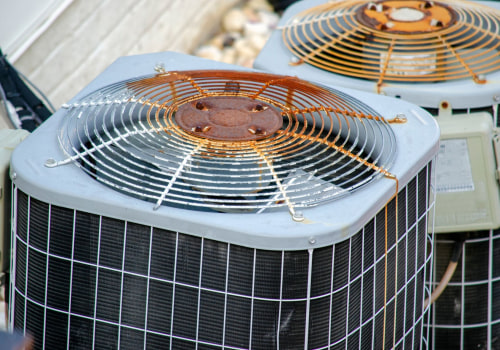
Wet insulation makes your heating and cooling work harder. Water dripping onto ducts can ruin their insulation wrap and damage controls on nearby equipment. And once the attic stays damp long enough for mold, the HVAC system can carry that musty air into every room it serves. If you've caught an earthy smell when the system kicks on, it's worth reading up on how moisture and mold in your HVAC system affect the air you breathe, and having the roof above it checked.
What You Can Do Tonight, and What Needs a Roofer
A few things are safe and genuinely useful while you wait for help:
Set a bucket or tub under the drip and lay towels around it.
Move furniture, rugs and electronics out of the way.
Photograph the stain, the drip and any damaged belongings for your insurance records.
If the ceiling is bulging, keep people and pets out of the room.
If it's safe, you can also check the attic with a flashlight to see where the water is coming in. Please stay off a wet roof, though. Tile cracks underfoot, wet surfaces are slick, and sealant applied in the rain rarely holds. When we get an emergency call, we stabilize first with a tarp or temporary patch once it's safe to get up there, then schedule the permanent repair as soon as the weather allows.
When Roof Repair in Santa Barbara Beats Replacement
Most leaks don't mean you need a new roof. A failed pipe boot, a cracked tile, a worn stretch of flashing or a clogged valley can usually be repaired on its own, and catching it early is what keeps the fix small.
Repair makes sense when the leak is isolated, the roof still has years left in it and the deck underneath is solid. Replacement enters the conversation when leaks show up in several spots, the underlayment has failed across the roof or soft decking turns up in more than one area. We'll tell you plainly which side of that line you're on, even when the answer is a repair.
If you're seeing signs of a leak, booking professional roof repair in Santa Barbara now, before the heart of the rainy season, leaves you with the most options and the smallest bill.

"The calls I remember most come in December. Somebody noticed a small stain in April, watched it all summer, and figured it had sorted itself out. Then the first big storm hits, and by the time I'm in the attic with a flashlight, the stain on the ceiling is the size of a dinner plate and the soft decking above it is closer to the size of a door. Tile roofs fool people the most. From the street they look fine, but the underlayment underneath may have been letting water through for months. A fair number of the leaks we fix are ones another company already looked at and couldn't trace, and nearly every time the water got in somewhere well away from where it showed up inside. We've always believed what's underneath your roof matters most, and a leak is the clearest example of that. Have it looked at while it's small and the weather's still dry. That's when the repair is quick and the bill is easy to live with."
Essential Resources
The homeowners who come through a leak with the smallest bill tend to be the ones who knew what to do before the first drip. Here's what we'd hand a neighbor before the rain comes back.
1. Dry It Out Within 48 Hours to Head Off Mold
This is where our 24-to-48-hour rule comes from. The EPA's guide explains why controlling moisture is how you control mold, what to dry first and when cleanup should go to a professional. If water has already reached your ceiling or insulation, read it tonight. A Brief Guide to Mold, Moisture and Your Home — U.S. EPA
2. Look Up Your Roofer's License Before Anyone Climbs a Ladder
California requires a licensed contractor for most roofing work, and the CSLB lookup takes about two minutes. It shows license status, classification, bonding and any complaint history. Ours is CSLB #504492 , and we'd encourage you to check it along with anyone else you're considering. Check a Contractor License — California Contractors State License Board
3. Find Out Whether Your Roof Work Needs a City Permit
A small leak repair often won't need one. Larger repairs and reroofs usually do. The City of Santa Barbara's Building and Safety page lays out what requires a permit and how its online and on-demand options work, and any contractor who skips a required permit is showing you how they'll treat the rest of the job. Building Permit Forms and Applications — City of Santa Barbara
4. See What Professional Roofing Standards Look Like
The National Roofing Contractors Association publishes technical guidance roofers across the country work from, and we're proud to be members . Its site is a useful yardstick for what a careful repair should include, from the underlayment up to the flashing. National Roofing Contractors Association (NRCA)
5. Know Your Duty to Protect the Home Before You File a Claim
The California Department of Insurance spells out something every homeowner with a leak should hear: your policy may not cover further damage if you didn't take reasonable steps to protect the property. The guide also covers documenting the loss and working with an adjuster. Residential Property Claims Guide — California Department of Insurance
6. Check How Much Rain Has Already Fallen This Season
The county's Flood Control District posts rainfall totals by station, including downtown Santa Barbara, Goleta and Carpinteria. A quick look after a storm tells you how hard your roof just got tested and whether it's time for a trip to the attic. Rainfall and Reservoir Summary — Santa Barbara County Flood Control District
7. Watch the Forecast Before You Put Off a Repair
The National Weather Service office in Oxnard covers Santa Barbara County. If a storm is on the way, a leak you were planning to deal with next week just moved up the list. National Weather Service Los Angeles/Oxnard
Put together, these show why acting early and hiring licensed help pays off, and why waiting on a repair can cost more than handling it now, whether the problem is over your head or inside the system that heats and cools your home.
Supporting Statistics
The leak is rarely the expensive part. In our experience, the time that passes before someone fixes it is what drives the cost up.
The EPA advises drying water-damaged areas and materials within 24 to 48 hours to prevent mold growth.
That's the clearest answer we know of to "how long can I wait?"
A roof leak re-wets the same materials every time it rains, so the clock starts over with each storm.
U.S. Environmental Protection Agency — A Brief Guide to Mold, Moisture and Your Home
About 1 in 60 insured homes files a water damage or freezing claim each year, and those claims averaged $15,400 between 2019 and 2023.
Water damage and freezing made up 22.6% of homeowners insurance losses in 2023, trailing only wind and hail.
Freezing is rare here, so for Santa Barbara homes the bigger share of that risk is rain getting in from above.
Interior water damage is where costs climb, because it means drywall, flooring, insulation and sometimes mold remediation.
A leak repaired before water reaches the living space usually costs a small fraction of that average.
Insurance Information Institute — Facts + Statistics: Homeowners and Renters Insurance
Santa Barbara's mean water-year rainfall is 18.44 inches, and in one record-setting season the city logged 8 inches in November alone.
Our rain arrives in bursts, and a single atmospheric river can deliver weeks' worth of water in a few days.
A leak that seemed minor all summer gets tested hardest in exactly those storms, which is why we push for repairs in early fall.
Santa Barbara County Flood Control data, reported by Noozhawk — Santa Barbara Records Wettest Start to Rainy Season in More Than a Century
Moisture that lingers in an attic rarely stays put. It can reach ducts and equipment too, which is why regular HVAC maintenance and a sound, dry roof end up protecting the same home.
Final Thoughts and Opinion
Here's our honest take after three decades of roof repair in Santa Barbara : putting off a leak is a decision, and it's one that gets more expensive every week the weather holds.
Santa Barbara hands homeowners something most of the country doesn't get, a long and fairly predictable dry season. We think that's the best tool you have, as long as you use it. A leak fixed in October is about as simple as roof work gets. The same leak in February means tarps, rescheduled visits, soaked insulation and a much longer list of repairs.
These are the costs we see waiting add, most often:
A small tile or flashing repair grows into replacing sections of roof deck.
A ceiling stain becomes new drywall, texture and paint.
Damp insulation turns into an attic moisture problem, and sometimes mold.
A claim that would have been simple gets complicated by questions about whether the home was protected in time.
We also don't believe in scaring people into a new roof. Most of the leaks we're called out for are isolated and very fixable, and we'll say so when that's the case. The only way to know which kind you have is to put eyes on it from the attic and from the roof.
So if a dry week has you thinking the problem went away, we'd gently push back. Here, a leak just sits quietly until the next storm finds it.
Frequently Asked Questions
How long can you leave a leaking roof before it causes damage?
Damage begins almost right away, and mold can start within 24 to 48 hours if materials stay wet.
Drywall and insulation soak up water within hours, while the roof deck and framing take longer but suffer damage that's harder to undo.
Every new rain re-wets the same spot and starts the drying clock over.
Plan on an inspection within two days.
Is a roof leak an emergency?
Water actively coming in or a bulging ceiling is an emergency. A dry stain is urgent, though usually not an emergency.
Call the same day if water is dripping or the ceiling is sagging.
Keep people and pets away from any ceiling that's holding water.
If you're looking at a dry stain, book an inspection before the next storm.
When an emergency crew can safely get on the roof, a tarp will hold things until the permanent repair.
If you're unsure which kind you have, treat it as urgent. Being early costs less.
Can a small roof leak fix itself or dry out?
The water can dry between storms, but the opening it came through stays open.
Cracked tiles, failed flashing and worn underlayment have to be repaired.
Santa Barbara's long dry spells are exactly what let leaks hide until the first big rain.
Moisture trapped in the attic can keep feeding mold even when the ceiling looks dry.
When a leak seems to stop, it's usually the rain that stopped.
How much does roof repair cost in Santa Barbara?
Most leak repairs here run from several hundred dollars into the low thousands, depending on the roof and how far the water has traveled. One cost guide puts the local average around $849 for a repair versus about $7,960 for a replacement.
Tile and flat roofs usually cost more to repair than asphalt shingle.
Hidden damage to the deck or framing is what pushes a price up the most.
The priciest roof repair in Santa Barbara is usually the one that waited a season.
Does homeowners insurance cover a leaking roof?
It depends on what caused it. Insurers often cover sudden damage, like wind lifting tiles during a storm, but they usually won't pay for wear and tear.
Insurers expect you to take reasonable steps to keep the damage from spreading.
Photograph the leak and anything damaged as soon as you find it.
Report the loss promptly and hang on to receipts for any emergency work.
Read your policy, and don't let a coverage question hold up a temporary fix.
Should I repair or replace a leaking roof?
Most leaking roofs can be repaired. Replacement makes sense when leaks are spread across the roof or the roof is near the end of its life.
Repair is the right call when the leak is isolated and the deck is solid.
Replacement belongs in the conversation once the underlayment has failed broadly or several areas are leaking.
Only an inspection from both the attic and the roof can tell you which one you're dealing with.
An honest inspection should come first, and it should be free.
Get It Fixed Before the Next Storm
Spotted a stain, a drip or a musty smell in the attic? Call Quality Roofing at (805) 965-2416 or text us a few photos for a fast, free estimate. We're a women-owned, family-led Santa Barbara roofer that's been finding and fixing leaks since 1996, and our repairs come with up to a 7-year workmanship warranty . We'll check the roof from above and the attic from below, then give you a straight answer on what it needs while the weather's still on your side.